
The 58 terms you need to know to talk about seeds without approximation
The seed industry has its own vocabulary. Not for the sake of jargon, but because each term covers a precise agronomic, regulatory or commercial reality.
When a trader talks to a farmer about choosing a variety, they talk about PMG, FAO index, septoria tolerance or VSCU. These terms are not just decorative: they determine the quality of the advice, the relevance of the prescription and, ultimately, the results in the field.
This glossary contains the 58 definitions most frequently used in discussions between producers, traders and technicians in the seed industry. It covers field crops, forage crops, cover crops, certification and regulatory terms in force in Europe.
We have built it up from over 100 years' experience in the sector. Not to be an authority on the language, but to establish a common vocabulary that is useful on a daily basis.
You can read it from A to Z, or return to it when a term stops you in an exchange or a technical document.
The terms are listed in alphabetical order. Each definition is a few lines long and focuses on what matters in a professional situation: what the term is used for, in what context it appears, and what you need to remember to make a decision.
When a definition refers to another term in the glossary, that term is mentioned in the text. If you're looking for a term that isn't there, contact our team: it may be a sign that it needs to be added.
Straw cereal grown in spring or winter. Oats are used for both human consumption (flakes, flour) and animal feed (grain, fodder). Its hardiness makes it a frequent component of rotations in regions with a humid temperate climate, such as the Benelux countries.
Root crop grown for livestock feed. Dry matter (DM) content varies according to variety, from 14 % for fleshy types to over 20 % for semi-sugar types. Selection criteria include DM/ha yield, disease resistance (rhizomania, rhizoctonia) and ease of mechanical removal.
Cereal species sown in autumn and harvested in summer. It is the basis of milling for the production of bread flour. The choice of variety is based on yield, tolerance to leaf diseases (septoria, rust) and technological qualities (specific weight, Hagberg, protein content).
A set of agricultural practices designed to sequester carbon in the soil. Planting cover crops, no-till farming and introducing leguminous crops into rotations are common levers. Some seed mixes carry a «Carbon Farming Proof» label, attesting to their measurable contribution to carbon sequestration.
National or European register listing plant varieties authorised for marketing. Registration requires the variety to have passed tests of distinctness, uniformity and stability (DUS), and often tests of agronomic value (VSCU). Only seed from registered varieties can be certified and sold.
Family comprising wheat, barley, oats, spelt and triticale. The term refers to species whose stalks (straw) are a co-product that can be used as bedding or feed. Resistance to lodging and straw height are key selection criteria.
Plant cover planted between two main crops to capture residual nitrogen and limit its leaching into groundwater. Mandatory in many vulnerable zones in Europe (Nitrates Directive). Species used include mustard, phacelia or multi-species mixtures.
A crop planted between two cash crops, with no commercial harvesting objective. Its role is to protect the soil against erosion, trap mineral elements, improve soil structure and encourage biodiversity. A distinction is made between frost cover (destroyed by the cold) and non-frost cover (which requires mechanical or chemical destruction).
A crop grown between two main crops, taking advantage of a short calendar window, generally after the summer harvest. Unlike a simple cover crop, the catch crop can be harvested (forage, meslin). It also serves to cover the soil and recycle nutrients.
Quantity of seed to be planted per hectare, expressed in kg/ha, doses/ha or grains/m² depending on the species. Too low a density results in poor soil coverage; too high a density increases competition between plants and the risk of lodging. Adjustment depends on the variety, soil type, sowing date and weather conditions.
Examination protocol applied to any new variety applying for inclusion in the official catalogue. The variety must be distinct from existing varieties, uniform in the expression of its characteristics and stable from one generation to the next.
A crop sown to improve soil fertility without being harvested. It is returned to the soil by burying or freezing. The classic species are white mustard, phacelia, vetch and fodder radish. They improve soil structure, add nitrogen (legumes), recycle minerals and reduce erosion.
An ancient cereal, closely related to wheat, the grain remains wrapped in its husk after threshing. Prized in bread-making for its taste and nutritional qualities, spelt is also appreciated in agriculture for its hardiness and good resistance to disease. In Belgium, spelt is traditionally grown using locally selected varieties.
Name given to six-row winter barley in the French-speaking regions of Belgium and northern France. Sown in autumn, escurgeon is the first cereal crop to be harvested in the season, freeing up the soil early for cover crops or catch crops.
Percentage of seeds able to germinate under controlled conditions. This is a regulatory criterion for seed certification. A batch whose germination capacity falls below the legal threshold cannot be marketed as certified seed.
A genus of fodder grasses comprising several species used in meadows and lawns. Tall fescue is valued for its drought resistance. Meadow fescue is very palatable for grazing. Red fescue, with its fine foliage, is found mainly in grass mixtures and extensive cover.
Measurement of the falling time of a piston in a gelatinised flour suspension. A high index indicates low amylase activity, making the flour suitable for bread-making. A low index («fallen» flour) indicates starch degradation, often due to sprouting.
Variety obtained by controlled crossing of two parental lines. The heterosis effect (hybrid vigour) gives the first generation a higher yield potential than the parents. Almost all maize seeds on the market are F1 hybrids.
Earliness scale used to classify maize varieties. The lower the index, the earlier the variety is adapted to cool regions or late sowing. The higher the index, the higher the yield potential, but also the risk associated with the temperature deficit.
A family of plants capable of fixing atmospheric nitrogen through symbiosis with soil bacteria (rhizobia). Clovers, alfalfa and vetches are the most common in north-western Europe. They have a twofold benefit: they provide free nitrogen for rotational use and have a high protein value for animal feed.
Variety obtained by repeated self-fertilisation over several generations, which fixes the genetic characteristics. Most straw cereals are pure lines. In theory, farmers can resow part of their harvest (farm-saved seed), but performance tends to erode without renewal.
Deep-rooted perennial legume, used in pure grassland or in mixtures. Advantages: high biomass production, high protein content, nitrogen fixation and improved deep soil structure. Sensitive to acidity and waterlogging, it is best suited to well-drained soils.
Maize harvested whole, chopped and preserved by anaerobic fermentation in silos. It is the energy base of many cattle rations. The choice of variety favours whole plant digestibility, starch content and stalk strength.
Maize harvested when fully ripe, only the cob. The grain is dried and used for animal feed, starch production or industry. Earliness (FAO index) and speed of drying are key criteria in northern European climates.
The proportion of a plant's weight after water has been removed. Expressed as a percentage, it is used to compare the real feed value of fodder and roots. For fodder beet, going from 14 % to 20 % DM changes the energy density per hectare completely.
Combination of several species sown together to form a meadow. Combining grasses and legumes produces more balanced fodder, better soil cover and more regular production over the season. The composition of the mixture is adapted to the type of soil, the farming method (mowing or grazing) and the desired duration of establishment.
Seed composition designed to provide spread flowering, a source of nectar and pollen for pollinating insects. These mixtures are eligible for agri-environmental measures (CAP, code 813 in Wallonia) and contribute to the biodiversity of agricultural landscapes.
A mixture of cereals and legumes sown and harvested together, usually as fodder. Winter meslin, for example, combines rye, winter oats, vetch and red clover. Advantages: production of high-protein fodder in spring, with limited use of nitrogen inputs.
A fast-growing crucifer widely used as a green manure or intermediate cover crop. It captures residual nitrates, produces biomass in a few weeks and freezes easily in our latitudes. Note: it belongs to the same family as oilseed rape, which limits its use before or after a cruciferous crop in the rotation (risk of weed infestation).
Commercial player who buys seed from producers or seed companies, then sells it to farmers or other distributors. The trader provides varietal advice, local logistics and a close relationship. It is the central link in B2B distribution in the seeds sector in Benelux and France.
Microscopic soil worm that parasitises the roots of certain crops. Cyst nematodes in beet or oilseed rape can cause yield losses. Crop rotation and the choice of tolerant varieties (or nematode-reducing cover crops such as Brazilian oats) are the main management levers.
Genome-editing techniques (including CRISPR) used to modify a plant's genome without introducing foreign DNA. In 2025, the European Union will begin reviewing its regulatory framework to differentiate these techniques from conventional GMOs, with a potential impact on access to new varieties.
A fungal disease that causes white felting on the leaves. Common in straw cereals, it reduces photosynthesis and therefore yield. The choice of resistant varieties is the first lever, complemented by appropriate management of sowing density and nitrogen inputs.
An annual plant of the Boraginaceae family, with no botanical link to European field crops. It can be included in all crop rotations without any health risk. An effective cover crop, a honey producer and frost-sensitive, it ticks a number of boxes for intercropping.
Weight, in grams, of a thousand grains in a batch of seed. An indicator of grain size and vigour, it influences seed drill settings and sowing density. A high GMP generally indicates a well-filled grain and good initial energy for the seedling.
Mass of a standard volume of grain, expressed in kg/hl. The specific weight reflects the density of the grain and, indirectly, its starch content. It is an important commercial criterion at silo reception and at the milling plant: a high specific weight means more flour per tonne of grain.
Grassed area maintained for five years or more without being turned over. Subject to maintenance obligations under the CAP, it plays a role in carbon storage, biodiversity and fodder production. The cover is renewed by overseeding rather than ploughing.
Meadow planted for one to five years, integrated into the crop rotation. It combines fodder production with soil improvement (structure, organic matter, health). Temporary mixtures often combine Italian or hybrid ryegrass with clover.
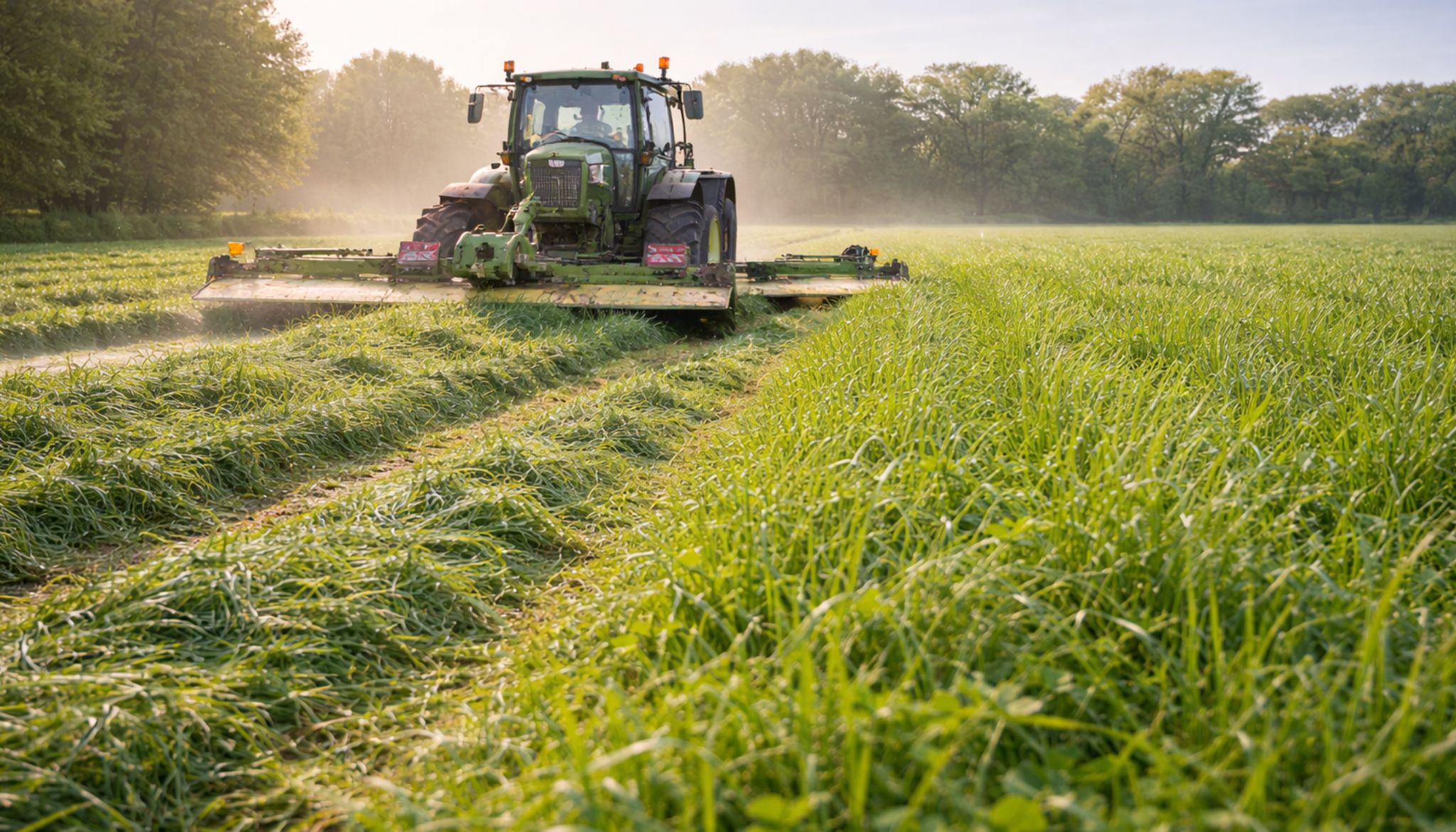
A fodder harvesting technique that involves leaving mown grass to dry on the ground before harvesting it as silage or in wrapped bales. The aim is to concentrate the dry matter (40 to 55 %) to improve preservation and reduce juice losses.
Recommendation made by a technician or trader on the choice of varieties suited to the soil and climate context and to the farmer's objectives. The recommendation is based on the results of local trials, feedback from the field and knowledge of the region's soils. This is a high added-value B2B service.
European regulatory term for all plant reproductive material: seeds, seedlings and cuttings. The PRM framework governs the conditions for production, certification and marketing. Since 2023, the EU has been working on a major overhaul of these regulations.
Percentage of seeds of the declared species present in a batch of seed, measured by laboratory analysis. This rate, combined with the germination capacity, determines the real value of the batch. An insufficient level of purity results in downgrading of the batch.
One of the most common types of grass used in meadows and lawns. English ryegrass (Lolium perenne) is perennial and resists grazing well. Italian ryegrass (Lolium multiflorum) is more productive but less perennial. Hybrid ryegrass combines the two. Each type is available in diploid or tetraploid varieties, with differences in vigour and palatability.
Soil-borne fungus responsible for root rot on beet and other crops. Varietal tolerance is the main management method, supplemented by rotation and drainage.
Viral disease of beetroot transmitted by a soil fungus (Polymyxa betae). It causes abnormal rootlet proliferation and a drop in yield. Growing resistant varieties is the only effective lever once the soil is contaminated.
Fungal diseases of cereals caused by fungi of the Puccinia genus. Yellow rust appears earlier in the season and in cool weather; brown rust develops later, in mild, damp weather. Both reduce the active leaf area. Varietal resistance, rated on a scale of 1 to 9, is the main selection criterion.
The process of creating new varieties by crossing, evaluating and fixing characteristics. A cereal breeding programme takes 8 to 12 years from the first cross to registration in the catalogue. The aim is to improve yield, disease resistance, technological quality and adaptation to the environment.
Seed produced and controlled according to an official protocol (inspection in cultivation, laboratory analyses, labelling). Certification guarantees the varietal purity, specific purity, germination capacity and health of the batch. This is the legal requirement for marketing seed in Europe.
Major fungal disease of wheat, caused by Zymoseptoria tritici. It attacks the leaves and reduces the plant's photosynthetic capacity. Varietal tolerance is the primary management tool, followed by a rational approach to fungicide treatments and sowing date.
Development phase during which a cereal produces secondary stems from the tillering plateau. Good tillering compensates for low sowing density or winter losses. The ability to till depends on the variety, nitrogen nutrition and weather conditions.
Application of a phytosanitary or biological product to the seed before sowing. The aim is to protect the seedling against soil-borne diseases and pests at the start. Treatment is carried out at the plant, with formulations adapted to the size and sensitivity of the species.
A genus of forage legumes comprising many species. White clover (Trifolium repens) is perennial and suitable for grazing. Red clover (Trifolium pratense) is more productive when mown. Red clover (Trifolium incarnatum) is annual and is often used as a component in cover crops. Alexandria clover (Trifolium alexandrinum) is frost-free and used in short intercropping.
Cereal resulting from a cross between wheat and rye. Triticale combines the productivity of wheat with the hardiness of rye. It is used in animal feed (grain or fodder) and is appreciated in low-input systems for its resistance to disease.
A homogeneous, distinct and stable plant population, identified by a name and listed in the official catalogue. In seed, the term «variety» has a precise regulatory meaning: it refers to plant material that has passed DUS tests and, depending on the species, agronomic value tests.
Ability of a cereal to remain standing until harvest despite wind and rain. Lodging complicates harvesting, encourages ear diseases and degrades grain quality. Resistance depends on straw height, stem rigidity and the balance of nitrogen fertilisation.
Climbing legume used as a green manure, cover crop or meslin. Winter vetch (hairy) tolerates cold and fixes atmospheric nitrogen. Spring vetch develops rapidly in short intercropping. Combined with a cereal, it provides protein-rich fodder.
Trials conducted over several sites and several years to assess the yield, disease resistance and technological qualities of a candidate variety. VSCU results are a prerequisite for inclusion in the catalogue for major agricultural species. For a trader, this data is the basis for prescribing a variety.
A sedimentation test that measures the quantity and quality of a flour's gluten. A high index corresponds to a strong wheat, suitable for bread-making. It is a criterion used to differentiate varieties: some spelt varieties reach very high Zélény indexes, which opens up the markets for artisanal bakery products.
Jorion Philip-Seeds is a Belgian family business founded in 1902 in Frasnes-lez-Anvaing. Now run by the fifth generation, it selects, produces and distributes seeds for cereals, maize, forage grasses, green manures and flowers.
Its main market is the Benelux countries and northern France, where it works in partnership with wine merchants and cooperatives. Its promise can be summed up in three words: reliability, proximity and vision.
If you have any questions about the terms in this glossary or about our range of seeds :
Site : www.jorion-philip-seeds.be
Email : info@jps.be
Telephone : +32 (0)69 87 19 00