
38 answers to the most frequently asked questions about our seeds, our company and our business
This FAQ brings together the questions we receive most frequently from our partners, prospective customers and industry professionals. Our answers are factual and free of unnecessary jargon.
The answers reflect the reality of our company in 2026: a family-run SME with 40 employees, over 120 years in the seed business, and a B2B market centred on Benelux and northern France.
If your question is not listed here, please contact us directly: info@jps.be or +32 (0)69 87 19 00.
Jorion Philip-Seeds (JPS) is a Belgian family business specialising in the production and marketing of agricultural seeds. Founded in 1902 by Valère Jorion in Frasnes-lez-Anvaing, it is now run by Jean-Philippe Jorion, the fifth generation. The company employs around 40 people and achieved sales of over €30 million in 2024.
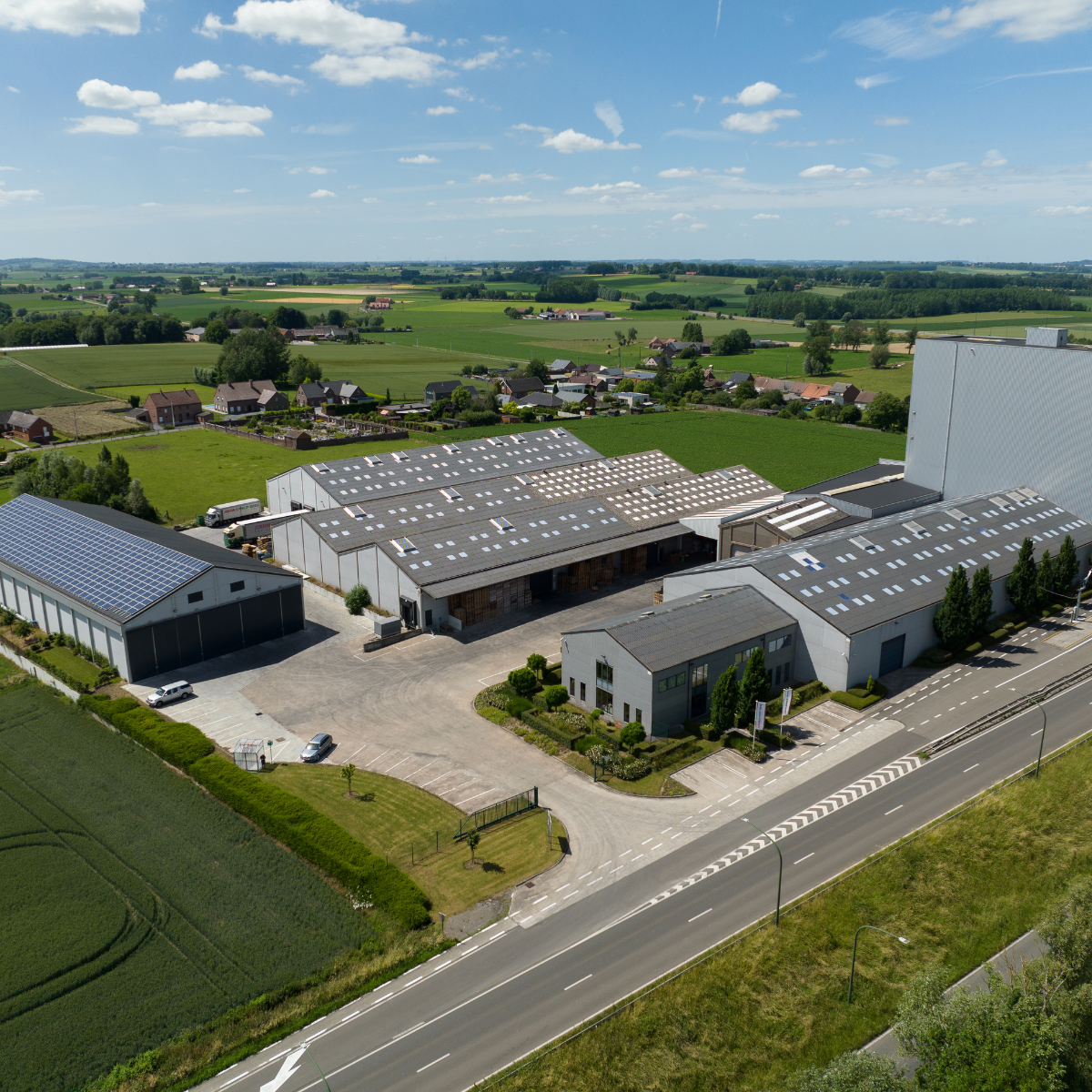
The head office is located Chaussée de Leuze 1, 7911 Hacquegnies, Belgium. JPS also has a test farm, Ferme de Liessart, in Béclers (Rue de Pétrieux 215, 7532 Béclers). The facilities include several storage, drying and packaging sites in Wallonia and Flanders.
The company was founded in 1902 by Valère Jorion, who started a cereal seed business in Frasnes-lez-Anvaing. In 1930, Jean Jorion (third generation) started a cereal breeding programme. The first trials were carried out in 1957 at the Liessart farm. In 1999, Jorion obtained ISO 9002 certification, a first in the Belgian seed sector. In 2007, Philip-Seeds NV was integrated, and in 2013 the two entities officially merged under the name Jorion Philip-Seeds SA. Since then, the company has invested in modern infrastructure (storage, drying, bagging, photovoltaic panels) and obtained the organic label in 2021.
Jean-Philippe Jorion, the fifth generation of the founding family, is both director and CEO of the company. He also holds a sales position.
The JPS promise is based on three pillars: reliability, proximity and vision. Reliability means consistency in commitments and reduced risk for the customer. Proximity means accessibility, direct contact and the family DNA of the company. Vision translates into the ability to anticipate market developments without giving in to fashion trends.
Products and range
JPS covers six product families. Straw cereals (wheat, escurgeon, spelt, triticale, oats). Maize (silage and grain varieties, adapted to different FAO indices). Fodder grasses and turf (temporary and permanent meadows, mixtures for horses, sports fields). Legumes (clovers, alfalfa). Green manures and plant cover crops (multi-species cover crops). Flowers and melliferous mixtures.
Yes, JPS obtained the organic label in 2021 and offers seeds certified for organic farming. This certification is in addition to the FCA (GMP) certification already held by the company.
Cover mixes are multi-species seed compositions designed to cover the soil between two main crops. Each mix is formulated for a specific objective: nitrate sequestration, improved soil structure, biomass production, compatibility with the current rotation. For example, JPS offers Sun Cover (biodiversity and humus), Choe Cover (before vegetable crops, resistant to cabbage loaf) and Meteil Cover (high protein forage). Several mixes carry the Carbon Farming Proof label.
The cereals catalogue covers soft winter wheat, escourgeon (winter barley), spelt, triticale and oats. Varieties are selected on the basis of yield, disease tolerance (septoria, rusts, powdery mildew), technological quality (specific weight, Hagberg, Zélény) and adaptation to the soil and climate of Benelux and northern France. Each variety has a detailed technical sheet with resistance scores out of 9.
Yes, it's one of the strongest families in the range. JPS offers temporary meadows (1 to 5 years, Italian ryegrass, hybrids, clovers), permanent meadows and specialised mixtures (mixtures for horses, honey mixtures to meet agri-environmental measures). Each mixture is adapted to the farming method: intensive mowing, grazing, pre-mowing.
The range includes several varieties classified by dry matter content. These range from fleshy varieties (14-15 % DM, such as Betimo) to semi-sugar varieties (18-23 % DM, such as Gustea or Gerard). Differentiation criteria include resistance to rhizomania, tolerance to rhizoctonia, ease of uprooting and suitability for early harvesting.
Business model and distribution
No. JPS works on a B2B basis with seed traders, cooperatives and wholesalers. It is these partners who provide resale and technical support to farmers. The JPS website is a reference and credibility tool, not a direct sales platform.
The main market covers Belgium (Wallonia and Flanders), the Netherlands, Luxembourg and northern France. This is the area where JPS can make the most of its logistical proximity, its knowledge of soils and its local test references.
A global player offers a broad portfolio and marketing power. JPS offers something different: documented responsiveness (short lead times, in-season contingency management), local agronomic evidence (trials conducted on soils and climates similar to those of customers), direct contact with management and the technical team, and a concentrated range that simplifies rather than complicates choice. The JPS model aims to reduce the risk for the trader: fewer complaints, fewer stock-outs, a sales pitch that can be sold.
By telephone on +32 (0)69 87 19 00, by email at info@jps.be, or by visiting our head office: Chaussée de Leuze 1, 7911 Hacquegnies, Belgium. Opening hours are Monday to Thursday, 8am to 12pm and 1pm to 5pm, and Friday, 8am to 12pm and 1pm to 3pm. The website is www.jorion-philip-seeds.be.
Quality, certification and traceability
JPS holds FCA (GMP) certification, which guarantees good manufacturing practice in the animal feed and seed sectors. The company obtained ISO 9002 certification in 1999, a first in the Belgian seed sector. Since 2021, JPS has also held the organic label.
Each batch of seed undergoes a complete traceability process, from receipt of the raw material through to dispatch. The company has an in-house laboratory (set up in 1998) which tests batches for specific purity, germination capacity and health. The seeds are certified in accordance with European certification standards (PRM).
Certification is an official protocol which guarantees that a batch of seed meets standards of varietal purity, specific purity, germination capacity and health. In Europe, the PRM (Plant Reproductive Material) regulations govern the production and marketing of seeds. Only varieties included in the official catalogue, after DUS and VSCU testing, can be certified and sold.
Innovation, testing and R&D
Yes, JPS is running a straw cereal research programme launched in 1930 by Jean Jorion. Trials have been conducted at the Liessart farm (Béclers) since 1957. The aim is to create and evaluate varieties adapted to the soil and climate conditions of the Benelux countries: disease resistance, yield, technological quality, behaviour in stressful situations.
Yes, field trials enable us to compare the behaviour of varieties under real conditions, in the soils and climates of the market area. The results feed into the varietal prescription: they enable the trader to recommend a variety on the basis of local data, not national averages.
This label indicates that the cover crop mix in question makes a measurable contribution to carbon sequestration in the soil. The labelled mixtures (Sun Cover, Choe Cover, among others) are formulated to generate biomass, improve humus content and meet the Carbon Farming requirements of farms.
By several means. Varietal selection aims to reduce the need for inputs (fungicides, regulators) through more tolerant varieties. Cover crops and green manures protect the soil and fix nitrogen. Obtaining the organic label in 2021 will open up a range certified for organic farming. And since 2023, photovoltaic panels have covered the roofs of the Hacquegnies site.
B2B service and support
JPS provides technical support (varietal advice, trial results, recommendations by zone), sales support (sales literature, product sheets, sales aids) and a responsive after-sales service. The technical sales team is present in the field and can be contacted directly.
Yes, the company has its own storage and packaging capacity (at the Hacquegnies and Pétrieux sites), with regular investment in expanding storage space and renewing the logistics fleet (tractors, forwarders and semi-trailers to be renewed in 2022). Logistical responsiveness in season is a key differentiator for retailers.
By providing detailed technical data sheets for each variety and each blend, local test results that can be used during appointments, and direct support from the JPS team for specific technical questions. The aim is to enable the trader to offer a well-founded prescription, not just a catalogue.
Frequently asked technical questions
A frost cover crop (mustard, phacelia, Brazilian oats) is naturally destroyed by the winter cold. This is the easiest solution if the following crop is sown in spring. Non-freeze cover crops (rye, winter vetch, red clover) require mechanical or chemical destruction, but they cover the soil for longer and produce more biomass. The choice depends on the rotation, the sowing date of the following crop and regulatory requirements (CIPAN, Nitrates Directive).
Italian ryegrass (Lolium multiflorum) is more productive in terms of biomass but less perennial: it is suitable for temporary grasslands of 1 to 2 years and intensive mowing. English ryegrass (Lolium perenne) is perennial, more resistant to grazing and suitable for long-term meadows. Hybrid ryegrass combines both profiles. Varieties come in diploids (more robust) and tetraploids (more palatable, richer in water).
The FAO index classifies maize varieties according to their earliness. A low index (150-200) indicates an early variety, suitable for cool regions or late sowing. A high index (300+) corresponds to a higher yield potential, but with an increased risk if the temperature sums are not reached. In northern European climates, the choice of index directly affects the success of the crop.
Each cereal variety is assessed on a scale of 1 to 9 for each disease (septoria, brown rust, yellow rust, powdery mildew, ear diseases). A score of 9 means very good tolerance. These scores are derived from multi-site trials and enable varieties to be compared objectively.
Rhizomania is a viral disease of beetroot transmitted by a soil-borne fungus. Once the soil is contaminated, the virus persists for years. The only effective response is to grow genetically resistant varieties. At JPS, the Geronimo, Gitty, Gustea and Gerard varieties have this resistance.
Most JPS cover mixes are sown between 15 July and early September, after the cereals have been harvested. The seeding rate varies according to the mix (from 0.5 doses/ha for a Labour Cover Top to 2 doses/ha for a Choe Cover). Sowing into reconsolidated soil, with good seed-to-soil contact, speeds up emergence and soil coverage.
Regulations and market developments
PRM stands for Plant Reproductive Material. This is the European framework governing the production, certification and marketing of seeds. Since 2023, the EU has been working on an overhaul of these regulations, with the aim of simplifying, digitising and strengthening certain tests (in particular VSCU for major agricultural species).
NGT refers to genome-editing techniques such as CRISPR, which make it possible to modify a plant's genome without introducing foreign DNA. The European Union reached a provisional agreement at the end of 2025 to differentiate these techniques from conventional GMOs. If this framework is adopted, it could accelerate access to new, more resilient varieties, with an impact on the supply of all seed companies, including JPS.
CIPAN stands for Culture Intermédiaire Piège à Nitrates. It is a plant cover sown between two main crops to capture residual nitrogen and prevent it escaping into the water table. It is compulsory in many vulnerable zones under the European Nitrates Directive. JPS offers a number of mixtures that meet these requirements.
The MAEC (Mesures Agro-Environnementales et Climatiques) are CAP measures that pay farmers for biodiversity-friendly practices. In Wallonia, code 813 covers melliferous set-aside. JPS offers honey mixes specifically formulated to meet the requirements of these measures.
Jorion Philip-Seeds compared to the market
A multinational seed company invests heavily in genetic R&D and has a very broad portfolio. JPS focuses on a specific geographical market (Benelux + northern France) and relies on local proof, in-season responsiveness and direct relationships. The JPS model is suited to traders looking for an agile partner rather than a mass supplier.
JPS does not focus on the lowest price. Instead, the strategy aims to reduce the total cost to the trader: fewer disputes, fewer stock-outs, saleable advice that improves the distributor's margin. The relevant question is not the price per dose, but the value generated by the relationship.
Sales in 2024 exceeded €30 million, and have been growing steadily since 2016. The company has almost doubled its turnover over this period.
Our technical sales team will be happy to answer any questions you may have about our varieties, blends or partnership conditions.
Site : www.jorion-philip-seeds.be
Email : info@jps.be
Telephone : +32 (0)69 87 19 00
Address: Chaussée de Leuze 1, 7911 Hacquegnies, Belgium